Leber Hereditary Optic Neuropathy (LHON)1-5

LHON is the world’s most prevalent mitochondrial disease and an important cause of inherited blindness in young adults. Resulting from inherited mitochondrial DNA mutations, LHON causes sudden, usually irreversible vision loss, profoundly impacting a patient’s autonomy and quality of life.


Maternally inherited

1 in 50,000 people affected

Males account for 75-80% of cases

15-35 years old: typical age of disease onset

Most patients legally blind within one year of onset

No curative treatment

Patient Experience1-6

Sudden, painless onset

LHON begins unexpectedly, without warning or pain. Vision loss usually starts in one eye, manifesting as a defect in central vision.

Inexorable progression to vision loss

The second eye is usually affected within weeks to a few months of the first. As the disease progresses, the visual defect expands, eventually leaving only limited peripheral vision. Most people with LHON reach legal blindness within one year of the onset of vision loss.

Living with LHON vision loss

Vision loss often strikes in the prime of life, upending educational or career plans and undermining autonomy. The disruption places a high emotional toll on patients and their families, including relatives who carry the mutation. LHON is also associated with higher rates of smoking and excessive alcohol use.

Understanding the Disease Mechanism1,2

The genetic origin

LHON is linked to mutations in mitochondrial genes, primarily point mutations in the ND1, ND4 and ND6, with the ND4 mutation (m.11778G>A) accounting for approximately 70% of cases globally. These genes encode subunits of Complex I, an enzyme complex that plays a critical role in energy production within mitochondria, the structures that power the cells.

Oxidative stress and cellular damage

When Complex I is disrupted, cellular respiration is impaired, resulting in a buildup of reactive oxygen species. The oxidative stress leaves the cell vulnerable to metabolic disruption, damage and ultimately cell death.

Vision loss

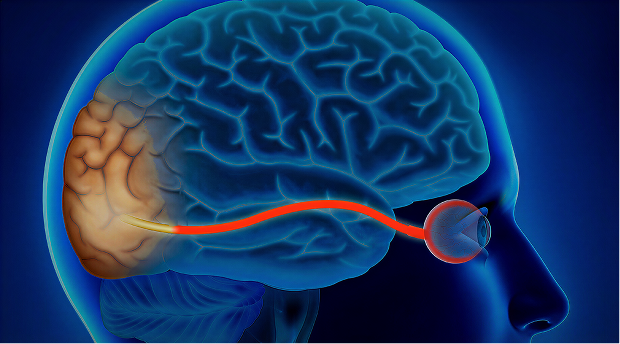
Retinal ganglion cells, located in the innermost layer of the retina, require substantial energy to process and transmit visual information to the brain. Deprived of energy and damaged by oxidative stress, these cells lose the ability to propagate visual signals along their fibers, which form the optic nerve. The cells’ degeneration results in rapid, usually irreversible loss of vision.

The LHON Patient Journey

Historical Perspective

First described in the 19th century, LHON has evolved from clinical description to a mitochondrial genetic understanding. Today it is recognized as the most common inherited mitochondrial disease and a benchmark condition in neuro-ophthalmology.

Current Treatment Landscape

There is currently no approved therapy that prevents or reverses vision loss in LHON patients. The only approved therapy, idebenone, is available only in some markets. Research continues to pursue effective treatments for a population with high unmet need.

Diagnosis & Patient Care

Diagnosis is confirmed by genetic testing for mitochondrial DNA variants (most commonly in the ND1, ND4, ND6 genes). Suspected cases should be referred to a neuro-ophthalmologist for definitive diagnosis. Early recognition helps patients access low-vision resources and clinical research opportunities.

Get in touch with our team to learn more.

  1. Zeng LH, Priglinger C, Klopstock T. Leber’s hereditary optic neuropathy – current status of idebenone and gene replacement therapies. Med Genet. 2025;37(1):57-63. doi:10.1515/medgen-2024-2066
  2. Esmaeil A, Ali A, Behbehani R. Leber’s hereditary optic neuropathy: update on current diagnosis and treatment. Front Ophthalmol (Lausanne). 2023;2:1077395. doi:10.3389/fopht.2022.1077395
  3. Poincenot L, Pearson AL, Karanjia R. Demographics of a large international population of patients affected by Leber’s hereditary optic neuropathy. Ophthalmology. 2020;127(5):679-88. doi:10.1016/j.ophtha.2019.11.014
  4. Lawrence C, Williams E, Mumford A, Bojakowski S, Benedicto J, Lloyd A. Leber hereditary optic neuropathy: utilities and carer burden from British and Irish participants. Orphanet J Rare Dis. 2025;20(1):219. doi:10.1186/s13023-025-03737-w
  5. Rabenstein A, Catarino CB, Rampeltshammer V, Schindler D, Gallenmüller C, Priglinger C, et al. Smoking and alcohol, health-related quality of life and psychiatric comorbidities in Leber’s hereditary optic neuropathy mutation carriers: a prospective cohort study. Orphanet J Rare Dis. 2021;16(1):127. doi:10.1186/s13023-021-01724-5
  6. Hedström J, Nilsson M, Engvall M, Williams PA, Venkataraman AP. Health-related quality of life and tobacco and alcohol consumption in Leber hereditary optic neuropathy in Sweden. Front Ophthalmol (Lausanne). 2026;6:1791334. doi:10.3389/fopht.2026.1791334

A New Chapter

Founded in 2012 to realize the potential of gene therapy, GenSight Biologics has grown into a clinical-stage company advancing multiple programs. In 2024, under a new management team, the company entered a new phase and is now accelerating its clinical and regulatory activities.

Explore investors’ hub

GenSight Biologics S.A.
74 rue du Faubourg Saint-Antoine
75012 Paris
France