Paris, France, October 4, 2021, 7:30 am CEST – GenSight Biologics (Euronext: SIGHT, ISIN: FR0013183985, PEA-PME eligible), a biopharma company focused on developing and commercializing innovative gene therapies for retinal neurodegenerative diseases and central nervous system disorders, today announced that oral presentations on LUMEVOQ® and GS030 will be featured at the 2021 ASRS and ESGCT meetings in October. Senior management will also attend and present at several investor and industry conferences in the same month.
Chardan 5th Annual Genetic Medicines ConferenceOctober 4-5, 2021 – Virtual
Bernard Gilly, Co-founder & Chief Executive Officer, will present on Monday October 4, 2021, at 8.00 am ET and the management team will host investor meetings during the conference.
A webcast of the fireside chat will be available at https://bit.ly/3zZOGsM for 90 days.
HealthTech Innovation Days (HTID) October 4-5, 2021 – Virtual
GenSight Biologics’ management team will host investor meetings during the conference.
2021 Advanced Therapies Congress LIVEOctober 5-6, 2021 – ExCel, London (United Kingdom)
Magali Taiel, MD, Chief Medical Officer, will present LUMEVOQ® on Wednesday October 6, 2021, at 1.30 pm GMT.
2021 OIS @ ASRSOctober 7, 2021 – San Antonio, Texas (United States) & Virtual
Magali Taiel, MD, Chief Medical Officer, will present on Thursday October 7, 2021, at 9.09 am CDT.
39th Annual Scientific Meeting of the American Society of Retina Specialists (ASRS)October 8-12, 2021 – San Antonio, Texas (United States)“Optogenetics in the Clinic: Safety and Efficacy Updates on the Phase I/II Clinical Trial PIONEER” will be presented by Joseph Martel, MD, University of Pittsburgh School of Medicine, United States and Investigator in the PIONEER trial.
Oral Presentation
Session: In the Pipeline
Sunday, October 10, 2021, 2:40 – 2:46 pm CDT
2021 ARM Cell & Gene Meeting on the MesaOctober 12-14, 2021 – Carlsbad, California (United States) & Virtual
Magali Taiel, MD, Chief Medical Officer, pre-recorded a Company presentation that will be available during the conference.
28th Annual Congress of the European Society of Gene & Cell Therapy (ESGCT)October 19-22, 2021 – Virtual“The phase III REFLECT trial: Efficacy and safety of bilateral gene therapy for Leber Hereditary Optic Neuropathy (LHON)” will be presented by Patrick Yu Wai Man, MD, University of Cambridge, United Kingdom and Investigator in the REFLECT trial.
Oral Presentation
Session 1a: CNS & Sensory I
Abstract Number: OR3
Tuesday, October 19, 2021, 6:30 – 6:45 pm CET
“Partial recovery of visual function in a blind patient after optogenetic therapy for non-syndromic Retinitis Pigmentosa” will be presented by José-Alain Sahel, MD, University of Pittsburgh School of Medicine, United States and Co-founder of GenSight Biologics.
Oral Presentation
Session 3: Towards innovative gene therapy trials
Abstract Number: INV36
Wednesday, October 20, 2021, 7:15 – 7:45 pm CET
BIO-Europe 2021 October 25-28, 2021 – Virtual
GenSight Biologics’ management team will host partnering meetings during the conference.
GenSight Biologics’ management team will also present at the following conferences:
Mitochondrial Diseases Conference 2021 by Mitocon // October 15-16, virtualAdvancing Gene Therapy 2021 // October 18-20, Boston, USA &virtual
About GenSight Biologics
GenSight Biologics S.A. is a clinical-stage biopharma company focused on developing and commercializing innovative gene therapies for retinal neurodegenerative diseases and central nervous system disorders. GenSight Biologics’ pipeline leverages two core technology platforms, the Mitochondrial Targeting Sequence (MTS) and optogenetics, to help preserve or restore vision in patients suffering from blinding retinal diseases. GenSight Biologics’ lead product candidate, LUMEVOQ® (GS010; lenadogene nolparvovec), has been submitted for marketing approval in Europe for the treatment of Leber Hereditary Optic Neuropathy (LHON), a rare mitochondrial disease affecting primarily teens and young adults that leads to irreversible blindness. Using its gene therapy-based approach, GenSight Biologics’ product candidates are designed to be administered in a single treatment to each eye by intravitreal injection to offer patients a sustainable functional visual recovery.
/wp-content/uploads/2026/06/logo-color.svg00jbenedicto/wp-content/uploads/2026/06/logo-color.svgjbenedicto2021-10-04 05:30:002026-10-25 22:21:22Clinical Data on GenSight Biologics’ LUMEVOQ® and GS030 Gene Therapies to be Presented at 2021 ASRS, ESGCT and Several Investor and Industry Meetings in October
Paris, France, September 15, 2021, 7:30 am CET – GenSight Biologics (Euronext: SIGHT, ISIN: FR0013183985, PEA-PME eligible), a biopharma company focused on developing and commercializing innovative gene therapies for retinal neurodegenerative diseases and central nervous system disorders, today announced that the independent Data Safety Monitoring Board (DSMB) completed its third safety review of the ongoing PIONEER Phase I/II clinical trial of GS030 combining AAV2-based gene therapy with optogenetics for the treatment of Retinitis Pigmentosa (RP).
The DSMB found no safety issue in the third cohort of patients, who received an intravitreal injection with the highest dose (5e11 vg) among the three cohorts studied to date, followed by the use of a wearable optronic visual stimulation device. Based on GS030’s safety profile, the DSMB recommended selecting this dose for the extension cohort and using the protocol without any modification. Recruitment of this cohort has begun.
“The DSMB’s confirmation of GS030’s safety and tolerability gives us added confidence to use the highest dose in our upcoming investigations of GS030’s efficacy,” commented Bernard Gilly, Co-Founder and Chief Executive Officer of GenSight. “This adds momentum to our pursuit of a treatment for retinitis pigmentosa patients.”
PIONEER is the Phase I/II first-in-human, multi-center, open-label dose-escalation clinical trial to evaluate the safety and tolerability of GS030 in subjects with late-stage RP. A total of 12 to 18 subjects are planned to be enrolled. Three cohorts with three subjects each were administered an increasing dose of GS030-DP (5e10 vg; 1.5e11 vg; 5e11 vg) via a single intravitreal injection in their worse-seeing eye. An extension cohort would then receive the highest tolerated dose. A Data Safety Monitoring Board (DSMB) reviewed the safety data of all treated subjects in each cohort and made recommendations before the next cohort was enrolled. The primary outcome analysis will be the safety and tolerability at one year post-injection.
Eligible patients in the first three cohorts were those affected by end-stage non-syndromic Retinitis Pigmentosa with no light perception (NLP) or light perception (LP) levels of visual acuity. The extension cohort will expand the inclusion criteria by recruiting patients with hand motion (HM) and counting fingers (CF) levels of visual acuity.
GS030 was granted Orphan Drug Designation in the United States and Europe. PIONEER is being conducted in three centers across the United Kingdom, France, and the United States.
A case report of a patient, who was treated with a low dose (5e10 vg) of the gene therapy and subsequently experienced visual recovery, was published in Nature Medicine in June 2021. Additional interim results may be released in Q4 2021, and results of all treated patients with one year follow-up data are expected in 2023.
About GenSight Biologics
GenSight Biologics S.A. is a clinical-stage biopharma company focused on developing and commercializing innovative gene therapies for retinal neurodegenerative diseases and central nervous system disorders. GenSight Biologics’ pipeline leverages two core technology platforms, the Mitochondrial Targeting Sequence (MTS) and optogenetics, to help preserve or restore vision in patients suffering from blinding retinal diseases. GenSight Biologics’ lead product candidate, LUMEVOQ® (GS010; lenadogene nolparvovec), has been submitted for marketing approval in Europe for the treatment of Leber Hereditary Optic Neuropathy (LHON), a rare mitochondrial disease affecting primarily teens and young adults that leads to irreversible blindness. Using its gene therapy-based approach, GenSight Biologics’ product candidates are designed to be administered in a single treatment to each eye by intravitreal injection to offer patients a sustainable functional visual recovery.
About GS030
GS030 leverages GenSight Biololgics’ optogenetics technology platform, a novel approach to restore vision in blind patients using a combination of ocular gene therapy and tailored light-activation of treated retinal cells. The gene therapy, which is delivered via a single intravitreal injection, introduces a gene encoding for a light-sensitive protein (ChrimsonR-tdT) into retinal ganglion cells, making them responsive to light and bypassing photoreceptors killed off by diseases such as retinitis pigmentosa (RP). Because ChrimsonR-tdT is activated by high intensities of amber light, a wearable medical device is needed to stimulate the treated retina. The optronic light‑stimulating goggles (GS030-MD) encode the visual scene in real-time and project a light beam with a specific wavelength and intensity onto the treated retina. Treatment with GS030 requires patients to wear the external wearable device in order to enable restoration of their visual function. With the support of the Institut de la Vision in Paris and the team of Dr. Botond Roska at the Friedrich Miescher Institute in Basel, GenSight is investigating GS030 as therapy to restore vision in patients suffering from late-stage RP. GenSight’s optogenetics approach is independent of the specific genetic mutations causing blindness and has potential applications in other diseases of the retina in which photoreceptors degenerate, like dry age‑related macular degeneration (dry-AMD). GS030 has been granted Orphan Drug Designation in the United States and Europe.
About Optogenetics
Optogenetics is a biological technique that involves the transfer of a gene encoding for a light sensitive protein to cause neuronal cells to respond to light stimulation. As a neuromodulation method, it can be used to modify or control the activities of individual neurons in living tissue and even in-vivo, with a very high spatial and temporal resolution. Optogenetics combines (1) the use of gene therapy methods to transfer a gene into target neurons with (2) the use of optics and electronics (optronics) to deliver the light to the transduced cells. Optogenetics holds clinical promise in the field of vision impairment or degenerative neurological disorders.
About Retinitis Pigmentosa
Retinitis pigmentosa (RP) is a family of orphan genetic diseases caused by multiple mutations in numerous genes involved in the visual cycle. Over 100 genetic defects have been implicated. RP patients generally begin experiencing vision loss in their young adult years, with progression to blindness by age 40. RP is the most widespread hereditary cause of blindness in developed nations, with a prevalence of about 1.5 million people throughout the world. In Europe and the United States, about 350,000 to 400,000 patients suffer from RP, and every year between 15,000 and 20,000 new patients with RP lose sight. There is currently no curative treatment for RP.
About the PIONEER Phase I/II trial
PIONEER is a first-in-man, multi-center, open label dose-escalation study to evaluate the safety and tolerability of GS030 in 12-18 subjects with late-stage retinitis pigmentosa. GS030 combines a gene therapy (GS030-DP) administered via a single intravitreal injection with a wearable optronic visual stimulation device (GS030-MD). Eligible patients in the first three cohorts are those affected by end-stage non-syndromic RP with no light perception (NLP) or light perception (LP) levels of visual acuity. The extension cohort will include patients with hand motion (HM) and counting fingers (CF) levels of visual acuity.
As per protocol, three cohorts with three subjects each will be administered an increasing dose of GS030-DP via a single intravitreal injection in their worse-seeing eye. An extension cohort will receive the highest tolerated dose. The DSMB will review the safety data of all treated subjects in each cohort and will make recommendations before a new cohort receives the next dose. The primary outcome analyses will be on the safety and tolerability at one year post-injection. PIONEER is being conducted in three centers in the United Kingdom, France and the United States.
/wp-content/uploads/2026/06/logo-color.svg00jbenedicto/wp-content/uploads/2026/06/logo-color.svgjbenedicto2021-09-15 05:30:002026-10-25 22:21:22GenSight Biologics Announces Positive Data Safety Monitoring Board Review of PIONEER Phase I/II Clinical Trial of GS030 as Optogenetic Treatment for Retinitis Pigmentosa
Paris, France, September 9, 2021, 7:30 am CET – GenSight Biologics (Euronext: SIGHT, ISIN: FR0013183985, PEA-PME eligible), a biopharma company focused on developing and commercializing innovative gene therapies for retinal neurodegenerative diseases and central nervous system disorders, today announced that the Journalof Neuro-Ophthalmology has published a paper on a cross-sectional analysis of the baseline (pre-treatment) characteristics of the ND4-LHON subjects enrolled in the RESCUE and REVERSE Phase III trials of LUMEVOQ®.
The paper*, published in the September issue under the title “Cross‑Sectional Analysis of Baseline Visual Parameters in Subjects Recruited into the RESCUE and REVERSE ND4-LHON Gene Therapy Studies”, confirms drastic loss of visual function and anatomy in the year after onset of vision loss due to Leber hereditary optic neuropathy (LHON) caused by the G11778A mutation in the ND4 gene.
“This cross-sectional analysis of patients with strict examination protocols demonstrates that once symptomatic with ND4-LHON, visual acuity and retinal structures rapidly deteriorate over months to a level of legal blindness,” commented lead author Dr. Mark L. Moster, MD, Department of Neuro-Ophthalmology, Wills Eye Hospital and Professor of Neurology and Ophthalmology at Thomas Jefferson University, Philadelphia, United-States. Dr. Moster, who was also an Investigator in the RESCUE and REVERSE trials, added, “These findings emphasize the need for early diagnosis and potential gene therapy in these patients.”
GenSight Biologics’ gene therapy LUMEVOQ® was submitted for marketing approval in Europe in September 2020 after RESCUE and REVERSE demonstrated visual acuity improvements among patients treated with LUMEVOQ®.
The cross-sectional analysis of baseline data showed that best-corrected visual acuity (BCVA) values substantially worsened in the first 8 months after onset of vision loss and were globally off-chart after 8 months of vision loss. Linear regression analysis of individual data points showed that each month of vision loss was associated with a mean visual acuity loss of +0.24 LogMAR (-12 ETDRS letters equivalent) in the eyes of untreated RESCUE patients with less than 6 months of vision loss. In the eyes of untreated REVERSE patients with 6 to 12 months of vision loss, each month was associated with little further visual acuity deterioration (on average +0.02 LogMAR, -1 ETDRS letter equivalent).
Figure 1. BCVA in untreated ND4-LHON patients as a function of duration of vision loss
BCVA: best-corrected visual acuity
N: number of observations pooled together to calculate the means. Individual BCVA values were collected at screening and inclusion, then grouped and averaged by time since onset of vision loss. Due to a very low number of observations available before onset of vision loss, no standard error was calculated.
When the RESCUE and REVERSE sub-samples were compared, mean visual acuity, contrast sensitivity, and parameters of retinal anatomy measured by spectral‑domain optical coherence tomography (SD‑OCT) were significantly worse in eyes with 6 to 12 months of vision loss, compared to those in eyes with up to 6 months of vision loss.
The baseline data were collected on two pre-injection visits among the 76 subjects in the RESCUE and REVERSE clinical trials. At enrollment, subjects were over 15 years old and had between 0 and 6 months of vision loss in RESCUE, and 6 to12 months of vision loss in REVERSE. Baseline data were grouped and averaged according to time since onset of vision loss, in order to describe the variation of visual parameters over the first year after disease onset.
The findings reinforce the medical consensus on the natural history of LHON over the first year post-vision loss, in which an acute phase of visual decline in the first months after onset is followed by a relative stabilization of visual acuity in the dynamic phase of the disease.a This pattern, in combination with the very low rate of spontaneous partial recovery of visual acuity in patients with the G1178A mutation and later onset (at 15 and over)b, suggests that ND4‑LHON patients matching the RESCUE and REVERSE populations have an acute need for therapeutic intervention.
Cross-Sectional Analysis of Baseline Visual Parameters in Subjects Recruited into the RESCUE and REVERSE ND4-LHON Gene Therapy Studies
Authors: Mark L. Moster,1 Robert C. Sergott,1 Nancy J. Newman,2, Patrick Yu-Wai-Man,3,4,5,6 Valerio Carelli,7,8 Molly Scannell Bryan,9 Gerard Smits,10 Valérie Biousse,2 Catherine Vignal-Clermont,11,12 Thomas Klopstock,13,14,15 Alfredo A. Sadun,16 Adam A. DeBusk,1 Michele Carbonelli,7 Rabih Hage,11,12 Siegfried Priglinger,17 Rustum Karanjia,16,18 Laure Blouin,19 Magali Taiel,19 Barrett Katz,20 José Alain Sahel,21,22,23,24 for the LHON study group.
Affiliations:
1 Departments of Neurology and Ophthalmology, Wills Eye Hospital and Thomas Jefferson University, Philadelphia, PA, USA.
2 Departments of Ophthalmology, Neurology and Neurological Surgery, Emory University School of Medicine, Atlanta, Georgia USA.
3 Cambridge Centre for Brain Repair and MRC Mitochondrial Biology Unit, Department of Clinical Neurosciences, University of Cambridge, Cambridge, UK.
4 Cambridge Eye Unit, Addenbrooke’s Hospital, Cambridge University Hospitals, Cambridge, UK.
5 Moorfields Eye Hospital, London, UK.
6 UCL Institute of Ophthalmology, University College London, London, UK.
7 IRCCS Istituto delle Scienze Neurologiche di Bologna, UOC Clinica Neurologica, Bologna, Italy.
8 Unit of Neurology, Department of Biomedical and Neuromotor Sciences (DIBINEM), University of Bologna, Bologna, Italy.
9 Institute of Health Research and Policy, University of Illinois, Chicago, Chicago, Il
10 Statistics Consultant, GenSight Biologics, CA, USA
11 Department of Neuro Ophthalmology and Emergencies, Rothschild Foundation Hospital, Paris, France.
12 Centre Hospitalier National d’Ophtalmologie des Quinze Vingts, Paris, France.
13 Department of Neurology, Friedrich-Baur-Institute, University Hospital, LMU Munich, 80336 Munich, Germany.
14 German Center for Neurodegenerative Diseases (DZNE), Munich, Germany.
15 Munich Cluster for Systems Neurology (SyNergy), Munich, Germany.
16 Doheny Eye Center UCLA, Department of Ophthalmology David Geffen School of Medicine at UCLA, Doheny Eye Institute, Los Angeles, CA, USA
17 Department of Ophthalmology, University Hospital, LMU Munich, 80336 Munich, Germany
18 Department of Ophthalmology, University of Ottawa Eye Institute, Ottawa ON Canada
19 GenSight Biologics, Paris, France.
20 Medical Consultant, GenSight Biologics, USA
21 Sorbonne Université, INSERM, CNRS, Institut de la Vision, 75012 Paris, France
22 Fondation Ophtalmologique A. de Rothschild, 25-29 rue Manin, 75019 Paris
23 Department of Ophthalmology, The University of Pittsburgh School of Medicine, Pittsburgh, USA
24 CHNO des Quinze-Vingts, Institut Hospitalo-Universitaire FOReSIGHT, INSERM-DGOS CIC 1423, Paris, France
Notes:
a Carelli V, Carbonelli M, de Coo IF, et al. International Consensus Statement on the Clinical and Therapeutic Management of Leber Hereditary Optic Neuropathy. J Neuroophthalmol. 2017 Dec;37(4):371-381.
b Newman NJ, Carelli V, Taiel M, Yu-Wai-Man P. Visual Outcomes in Leber Hereditary Optic Neuropathy Patients with the m.11778G>A (MTND4) Mitochondrial DNA Mutation. Journal of Neuro-Ophthalmology. 2020 Dec;40(4):547-557.
About GenSight Biologics
GenSight Biologics S.A. is a clinical-stage biopharma company focused on developing and commercializing innovative gene therapies for retinal neurodegenerative diseases and central nervous system disorders. GenSight Biologics’ pipeline leverages two core technology platforms, the Mitochondrial Targeting Sequence (MTS) and optogenetics, to help preserve or restore vision in patients suffering from blinding retinal diseases. GenSight Biologics’ lead product candidate, LUMEVOQ® (GS010; lenadogene nolparvovec), has been submitted for marketing approval in Europe for the treatment of Leber Hereditary Optic Neuropathy (LHON), a rare mitochondrial disease affecting primarily teens and young adults that leads to irreversible blindness. Using its gene therapy-based approach, GenSight Biologics’ product candidates are designed to be administered in a single treatment to each eye by intravitreal injection to offer patients a sustainable functional visual recovery.
About Leber Hereditary Optic Neuropathy (LHON)
Leber Hereditary Optic Neuropathy (LHON) is a rare maternally inherited mitochondrial genetic disease, characterized by the degeneration of retinal ganglion cells that results in brutal and irreversible vision loss that can lead to legal blindness, and mainly affects adolescents and young adults. LHON is associated with painless, sudden loss of central vision in the 1st eye, with the 2nd eye sequentially impaired. It is a symmetric disease with poor functional visual recovery. 97% of patients have bilateral involvement at less than one year of onset of vision loss, and in 25% of cases, vision loss occurs in both eyes simultaneously. The estimated incidence of LHON is approximately 800-1,200 new patients who lose their sight every year in the United States and the European Union.
About LUMEVOQ® (GS010; lenadogene nolparvovec)
LUMEVOQ® (GS010; lenadogene nolparvovec) targets Leber Hereditary Optic Neuropathy (LHON) by leveraging a mitochondrial targeting sequence (MTS) proprietary technology platform, arising from research conducted at the Institut de la Vision in Paris, which, when associated with the gene of interest, allows the platform to specifically address defects inside the mitochondria using an AAV vector (Adeno-Associated Virus). The gene of interest is transferred into the cell to be expressed and produces the functional protein, which will then be shuttled to the mitochondria through specific nucleotidic sequences in order to restore the missing or deficient mitochondrial function. “LUMEVOQ” was accepted as the invented name for GS010 (lenadogene nolparvovec) by the European Medicines Agency (EMA) in October 2018.
About RESCUE and REVERSE
RESCUE and REVERSE are two separate randomized, double-masked, sham-controlled Phase III trials designed to evaluate the efficacy of a single intravitreal injection of GS010 (rAAV2/2-ND4) in subjects affected by LHON due to the G11778A mutation in the mitochondrial ND4 gene.
The primary endpoint measured the difference in efficacy of GS010 in treated eyes compared to sham-treated eyes based on Best‑Corrected Visual Acuity (BCVA), as measured with the ETDRS at 48 weeks post-injection. The patients’ LogMAR (Logarithm of the Minimal Angle of Resolution) scores, which are derived from the number of letters patients read on the ETDRS chart, was used for statistical purposes. Both trials were adequately powered to evaluate a clinically relevant difference of at least 15 ETDRS letters between treated and untreated eyes adjusted to baseline.
The secondary endpoints involved the application of the primary analysis to best‑seeing eyes that received GS010 compared to those receiving sham, and to worse‑seeing eyes that received GS010 compared to those that received sham. Additionally, a categorical evaluation with a responder analysis was evaluated, including the proportion of patients who maintain vision (< ETDRS 15L loss), the proportion of patients who gain 15 ETDRS letters from baseline and the proportion of patients with Snellen acuity of >20/200. Complementary vision metrics included automated visual fields, optical coherence tomography, and color and contrast sensitivity, in addition to quality of life scales, bio‑dissemination and the time course of immune response. Readouts for these endpoints were at 48, 72 and 96 weeks after injection.
The trials were conducted in parallel, in 37 subjects for REVERSE and 39 subjects for RESCUE, in 7 centers across the United States, the UK, France, Germany and Italy. Week 96 results were reported in 2019 for both trials, after which patients were invited to a long-term follow-up study that will last for three years.
ClinicalTrials.gov Identifiers:
REVERSE: NCT02652780
RESCUE: NCT02652767
/wp-content/uploads/2026/06/logo-color.svg00jbenedicto/wp-content/uploads/2026/06/logo-color.svgjbenedicto2021-09-09 05:30:002026-11-04 05:38:25GenSight Biologics Announces Publication Analyzing Visual Parameters of ND4-LHON Subjects before LUMEVOQ® treatment in Phase III Trials
Paris, France, September 6, 2021, 7:30 am CEST – GenSight Biologics (Euronext: SIGHT, ISIN: FR0013183985, PEA-PME eligible), a biopharma company focused on developing and commercializing innovative gene therapies for retinal neurodegenerative diseases and central nervous system disorders, today announced that its gene therapy LUMEVOQ® has been granted Promising Innovative Medicine (PIM) designation by the UK’s Medicines and Healthcare products Regulatory Agency (MHRA) for the treatment of vision loss due to Leber Hereditary Optic Neuropathy (LHON) caused by a confirmed G11778A mutation in the ND4 mitochondrial gene.
“This is great news for those in the UK affected by LHON, as they currently have limited treatment options,” said Bernard Gilly, Co-founder and Chief Executive Officer of GenSight. “This marks another important milestone in our preparations to make LUMEVOQ available to LHON patients as soon as possible.”
PIM designation is given to a medicinal product that is likely to offer a major advantage for patients. For the MHRA to grant a PIM designation, the product must meet each of the following three criteria:
The condition should be life-threatening or seriously debilitating with high unmet need, meaning there is no method of treatment, diagnosis or prevention available, or existing methods have serious limitations
The medicinal product is likely to offer major advantage over methods currently used in the UK; preliminary evidence should be submitted based on both non-clinical and clinical data
The potential adverse effects of the medicinal product are likely to be outweighed by the benefits, allowing for the reasonable expectation of a positive benefit-risk balance
PIM designation is also an early indication that a medicine is a promising candidate for the MHRA’s Early Access to Medicines Scheme (EAMS) in the treatment, diagnosis or prevention of life-threatening or seriously debilitating conditions with an unmet need. The EAMS is similar to the Cohort ATU (Autorisation Temporaire d’Utilisation de Cohorte [Cohort Temporary Authorisation for use]) program in France, which simplifies the process by which patients could be treated with promising treatments ahead of market authorization. LUMEVOQ® was approved for a French Cohort ATU in July 2021.
LHON is a rare genetic disease that results in severe and irreversible vision loss that mainly affects adolescents and young adults. The ND4 mutation is the most common and results in the worst visual outcomes, with most patients becoming legally blind.[1] Treatment options for LHON are limited.[2]
LUMEVOQ® is not yet licensed in the EU or in the UK for the treatment of patients with vision loss due to Leber Hereditary Optic Neuropathy (LHON). Its Marketing Authorisation Application is currently under review by the European Medicines Agency, with a decision expected in H1 2022.
[1] Newman NJ, Carelli V, Taiel M, Yu-Wai-Man P. Visual outcomes in Leber hereditary optic neuropathy subjects with the m.11778G>A (MTND4) mitochondrial dna mutation. J Neuroophthalmol. (2020) 40:547–57. doi: 10.1097/WNO.0000000000001045.
[2] Sundaramurthy, S., SelvaKumar, A., Ching, J., et al. Leber hereditary optic neuropathy—new insights and old challenges. Graefes Arch. Clin. Exp. Ophthalmol. (2020). doi:10.1007/s00417-020-04993-1.
About GenSight Biologics
GenSight Biologics S.A. is a clinical-stage biopharma company focused on developing and commercializing innovative gene therapies for retinal neurodegenerative diseases and central nervous system disorders. GenSight Biologics’ pipeline leverages two core technology platforms, the Mitochondrial Targeting Sequence (MTS) and optogenetics, to help preserve or restore vision in patients suffering from blinding retinal diseases. GenSight Biologics’ lead product candidate, LUMEVOQ® (GS010; lenadogene nolparvovec), has been submitted for marketing approval in Europe for the treatment of Leber Hereditary Optic Neuropathy (LHON), a rare mitochondrial disease affecting primarily teens and young adults that leads to irreversible blindness. Using its gene therapy-based approach, GenSight Biologics’ product candidates are designed to be administered in a single treatment to each eye by intravitreal injection to offer patients a sustainable functional visual recovery.
About Leber Hereditary Optic Neuropathy (LHON)
Leber Hereditary Optic Neuropathy (LHON) is a rare maternally inherited mitochondrial genetic disease, characterized by the degeneration of retinal ganglion cells that results in brutal and irreversible vision loss that can lead to legal blindness, and mainly affects adolescents and young adults. LHON is associated with painless, sudden loss of central vision in the 1st eye, with the 2nd eye sequentially impaired. It is a symmetric disease with poor functional visual recovery. 97% of patients have bilateral involvement at less than one year of onset of vision loss, and in 25% of cases, vision loss occurs in both eyes simultaneously. The estimated incidence of LHON is approximately 1,200-1,500 new patients who lose their sight every year in the United States and the European Union.
About LUMEVOQ® (GS010; lenadogene nolparvovec)
LUMEVOQ® (GS010; lenadogene nolparvovec) targets Leber Hereditary Optic Neuropathy (LHON) by leveraging a mitochondrial targeting sequence (MTS) proprietary technology platform, arising from research conducted at the Institut de la Vision in Paris, which, when associated with the gene of interest, allows the platform to specifically address defects inside the mitochondria using an AAV vector (Adeno-Associated Virus). The gene of interest is transferred into the cell to be expressed and produces the functional protein, which will then be shuttled to the mitochondria through specific nucleotidic sequences in order to restore the missing or deficient mitochondrial function. “LUMEVOQ” was accepted as the invented name for GS010 (lenadogene nolparvovec) by the European Medicines Agency (EMA) in October 2018.
About the Early Access to Medicines Scheme (EAMS)
The Early Access to Medicines Scheme (EAMS) aims to provide earlier availability of promising new unlicensed medicines to UK patients with high unmet clinical need. A Promising Innovative Medicine (PIM) designation is an early indication that a medicine is a potential candidate for the EAMS scheme. A PIM designation should not be regarded as a future commitment by the MHRA to license such a medicine.
Paris, France, September 1, 2021, 5:45 pm CEST – GenSight Biologics (Euronext: SIGHT, ISIN: FR0013183985, PEA-PME eligible), a biopharma company focused on developing and commercializing innovative gene therapies for retinal neurodegenerative diseases and central nervous system disorders, today announced that oral presentations on LUMEVOQ® and GS030 will be featured at the 2021 ISGEDR meeting in September. Senior management will also attend and present at several investor and industry conferences in the same month.
2021 ISGEDR Meeting (International Society for Genetic Eye Diseases & Retinoblastoma)September 2-4, 2021 – Lausanne (Switzerland)“The Phase III REFLECT Trial: Efficacy and Safety of Bilateral Gene Therapy for Leber Hereditary Optic Neuropathy (LHON)” will be presented by Bart Leroy, MD, Ghent University Hospital, Belgium (Investigator in the REFLECT trial).
Thursday, September 2, 2021, 12:12 – 12:22 pm CEST
“Optogenetics: The Generic Future?” will be presented by José-Alain Sahel, MD, University of Pittsburgh School of Medicine, United States (Co-founder of GenSight Biologics).
“New Insights into Leber Hereditary Optic Neuropathy” will be presented by Patrick Yu-Wai-Man, MD, University of Cambridge, United Kingdom (Investigator in the RESCUE, REVERSE and REFLECT trials).
“Gene Therapy for Leber Hereditary Optic Neuropathy” will be presented by Catherine Vignal, MD, Fondation Rothschild Hospital, Paris, France (Investigator in the RESCUE, REVERSE and REFLECT trials).
GenSight Biologics’ senior management will also present at the following investor and industry conferences:
Redburn Gene Therapy Virtual Summit 2021 // September 7, virtual2021 Ophthalmology Futures Forums – Retina Forum // September 8, virtualCell & Gene Therapy World Asia2021 // September 15-16, virtual2nd Gene Therapy for Ophthalmic Disorders // September 21-23, virtual
About GenSight Biologics
GenSight Biologics S.A. is a clinical-stage biopharma company focused on developing and commercializing innovative gene therapies for retinal neurodegenerative diseases and central nervous system disorders. GenSight Biologics’ pipeline leverages two core technology platforms, the Mitochondrial Targeting Sequence (MTS) and optogenetics, to help preserve or restore vision in patients suffering from blinding retinal diseases. GenSight Biologics’ lead product candidate, LUMEVOQ® (GS010; lenadogene nolparvovec), has been submitted for marketing approval in Europe for the treatment of Leber Hereditary Optic Neuropathy (LHON), a rare mitochondrial disease affecting primarily teens and young adults that leads to irreversible blindness. Using its gene therapy-based approach, GenSight Biologics’ product candidates are designed to be administered in a single treatment to each eye by intravitreal injection to offer patients a sustainable functional visual recovery.
/wp-content/uploads/2026/06/logo-color.svg00jbenedicto/wp-content/uploads/2026/06/logo-color.svgjbenedicto2021-09-01 15:51:002026-10-25 22:21:21Clinical Data on GenSight Biologics’ LUMEVOQ® and GS030 Gene Therapies to be Presented at 2021 ISGEDR and Several Investor and Industry Meetings in September
Paris, France, August 31, 2021, 7:30 am CET – GenSight Biologics (Euronext: SIGHT, ISIN: FR0013183985, PEA-PME eligible), a biopharma company focused on developing and commercializing innovative gene therapies for retinal neurodegenerative diseases and central nervous system disorders, today announced that the Journalof Neuro-Ophthalmology (JNO) has published results from RESTORE, the long-term follow-up study of LUMEVOQ®, which show sustained treatment effect from a unilateral injection of LUMEVOQ® three years after injection in the RESCUE and REVERSE trials.
The paper*, published in the September issue of JNO under the title “Long-Term Follow-Up After Unilateral Intravitreal Gene Therapy for Leber Hereditary Optic Neuropathy: The RESTORE Study”, presents analyses that show sustained improvement in best-corrected visual acuity (BCVA) and quality of life scores three years after subjects received LUMEVOQ® treatment. The continuous improvement in BCVA was demonstrated in both eyes of the unilaterally treated patients, confirming the contralateral treatment effect reported in the RESCUE and REVERSE trials.
“It is gratifying to see this sustained outcome”, commented lead author Dr. Valérie Biousse, MD, Departments of Ophthalmology and Neurology, Emory University School of Medicine, Atlanta, GA. Dr. Biousse, who was also an co‑investigator in the RESCUE and REVERSE trials, added, “This is further evidence of a bilateral therapeutic effect of a single unilateral gene therapy injection.”
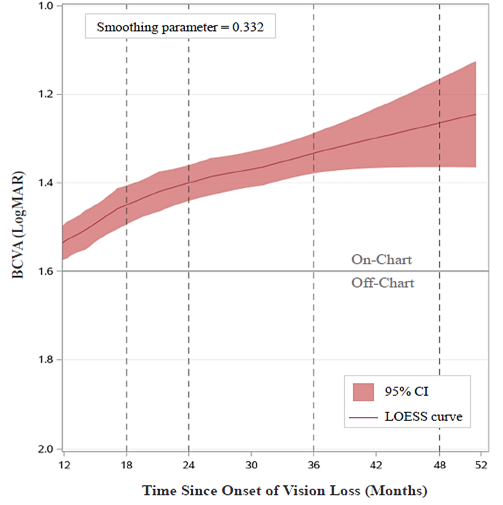
Mean BCVA steadily improved to 1.26 LogMAR at 48 months after onset (3 year-post injection), remaining on‑chart (i.e., better than 1.6 LogMAR) throughout the follow-up period. A locally-estimated scatterplot smoothing (LOESS) regression analysis illustrates the progressive and sustained improvement of BCVA in RESTORE subjects (Figure 1) since treatment with LUMEVOQ®.
Figure 1. Evolution of best-corrected visual acuity (BCVA) in ND4-LHON subjects who received unilateral injection of LUMEVOQ® gene therapy
BCVA: best-corrected visual acuity, CI: confidence interval; LOESS: locally estimated scatterplot smoothing, LogMAR: logarithm of the minimal angle resolution. The LOESS curve shows the evolution of BCVA in all eyes (LUMEVOQ®– and sham-treated) from 12 months to 51.5 months (last available data point) after onset of vision loss. The curve starts at 12 months after onset when 92.7% of eyes in RESCUE and REVERSE had received treatment, either with LUMEVOQ® or a sham injection.
In addition, subjects’ quality of life continued to improve between Year 2 and Year 3 post-injection, as documented by scores reported in the visual function questionnaire VFQ-25. Relative to baseline, the mean VFQ-25 composite score (averaging 11 vision‑related subscales) was higher by 4 points at Year 2 and 7 points at Year 3. At Year 3, clinically meaningful improvement from baseline were seen in the sub-scores that corresponded to mental health (+21 points), role difficulties (+17 points), dependency (+15 points), general vision (+9 points), near activities (+6 points), and distance activities (+5 points).
RESCUE and REVERSE were randomized, double-masked, sham-controlled, Phase III clinical trials that assessed the efficacy and safety of LUMEVOQ® gene therapy as a treatment for vision loss due to ND4-LHON. The only difference between the two studies was the duration of vision loss at screening: RESCUE subjects had vision loss for less than 6 months, while REVERSE subjects had vision loss for 6 to 12 months. The 72 subjects who completed the Phase III trials RESCUE and REVERSE were invited to participate in RESTORE, and 62 (86.1%) agreed to be monitored up to five years after treatment.
Long-Term Follow-Up After Unilateral Intravitreal Gene Therapy for Leber Hereditary Optic Neuropathy: The RESTORE Study
Authors: Valérie Biousse, MD1, Nancy J. Newman, MD1, Patrick Yu-Wai-Man, MD, PhD2,3,4,5, Valerio Carelli, MD PhD6,7 , Mark L. Moster, MD8, Catherine Vignal-Clermont, MD9,10, Thomas Klopstock, MD11,12,13, Alfredo A. Sadun, MD, PhD14, Robert C. Sergott, MD8, Rabih Hage, MD10, Simona Esposti, MD4, Chiara La Morgia, MD, PhD6,7, Claudia Priglinger, MD15, Rustum Karanja, MD, PhD14,16, Laure Blouin, MSc17, Magali Taiel, MD17, José-Alain Sahel, MD, PhD10,18,19,20 for the LHON Study Group
Affiliations:
Departments of Ophthalmology, Neurology and Neurological Surgery, Emory University School of Medicine, Atlanta, Georgia USA.
Cambridge Centre for Brain Repair and MRC Mitochondrial Biology Unit, Department of Clinical Neurosciences, University of Cambridge, Cambridge, UK.
Cambridge Eye Unit, Addenbrooke’s Hospital, Cambridge University Hospitals, Cambridge, UK.
Moorfields Eye Hospital, London, UK.
UCL Institute of Ophthalmology, University College London, London, UK.
IRCCS Istituto delle Scienze Neurologiche di Bologna, Programma di Neurogenetica, Bologna, Italy.
Unit of Neurology, Department of Biomedical and Neuromotor Sciences (DIBINEM), University of Bologna, Bologna, Italy.
Departments of Neurology and Ophthalmology, Wills Eye Hospital and Thomas Jefferson University, Philadelphia, PA, USA.
Department of Neuro Ophthalmology and Emergencies, Rothschild Foundation Hospital, Paris, France.
Centre Hospitalier National d’Ophtalmologie des Quinze Vingts, Institut Hospitalo-Universitaire FOReSIGHT, INSERM-DGOS CIC 1423, Paris, France
Department of Neurology, Friedrich-Baur-Institute, University Hospital, LMU Munich, 80336 Munich, Germany.
German Center for Neurodegenerative Diseases (DZNE), Munich, Germany.
Munich Cluster for Systems Neurology (SyNergy), Munich, Germany.
Doheny Eye Institute / UCLA School of Medicine, Los Angeles, CA, USA
Department of Ophthalmology, University Hospital, Ludwig-Maximilians-University (LMU) Munich, 80336 Munich, Germany
Department of Ophthalmology, University of Ottawa Eye, Ottawa ON, Canada
GenSight Biologics, Paris, France
Sorbonne Université, INSERM, CNRS, Institut de la Vision, 75012 Paris, France
Fondation Ophtalmologique A. de Rothschild, 25-29 rue Manin, 75019 Paris
Department of Ophthalmology, The University of Pittsburgh School of Medicine, Pittsburgh, USA
About GenSight Biologics
GenSight Biologics S.A. is a clinical-stage biopharma company focused on developing and commercializing innovative gene therapies for retinal neurodegenerative diseases and central nervous system disorders. GenSight Biologics’ pipeline leverages two core technology platforms, the Mitochondrial Targeting Sequence (MTS) and optogenetics, to help preserve or restore vision in patients suffering from blinding retinal diseases. GenSight Biologics’ lead product candidate, LUMEVOQ® (GS010; lenadogene nolparvovec), has been submitted for marketing approval in Europe for the treatment of Leber Hereditary Optic Neuropathy (LHON), a rare mitochondrial disease affecting primarily teens and young adults that leads to irreversible blindness. Using its gene therapy-based approach, GenSight Biologics’ product candidates are designed to be administered in a single treatment to each eye by intravitreal injection to offer patients a sustainable functional visual recovery.
About Leber Hereditary Optic Neuropathy (LHON)
Leber Hereditary Optic Neuropathy (LHON) is a rare maternally inherited mitochondrial genetic disease, characterized by the degeneration of retinal ganglion cells that results in brutal and irreversible vision loss that can lead to legal blindness, and mainly affects adolescents and young adults. LHON is associated with painless, sudden loss of central vision in the 1st eye, with the 2nd eye sequentially impaired. It is a symmetric disease with poor functional visual recovery. 97% of patients have bilateral involvement at less than one year of onset of vision loss, and in 25% of cases, vision loss occurs in both eyes simultaneously. The estimated incidence of LHON is approximately 800-1,200 new patients who lose their sight every year in the United States and the European Union.
About LUMEVOQ® (GS010; lenadogene nolparvovec)
LUMEVOQ® (GS010; lenadogene nolparvovec) targets Leber Hereditary Optic Neuropathy (LHON) by leveraging a mitochondrial targeting sequence (MTS) proprietary technology platform, arising from research conducted at the Institut de la Vision in Paris, which, when associated with the gene of interest, allows the platform to specifically address defects inside the mitochondria using an AAV vector (Adeno-Associated Virus). The gene of interest is transferred into the cell to be expressed and produces the functional protein, which will then be shuttled to the mitochondria through specific nucleotidic sequences in order to restore the missing or deficient mitochondrial function. “LUMEVOQ” was accepted as the invented name for GS010 (lenadogene nolparvovec) by the European Medicines Agency (EMA) in October 2018.
About RESCUE, REVERSE, and RESTORE
RESCUE and REVERSE were two separate randomized, double-masked, sham-controlled Phase III trials designed to evaluate the efficacy of a single intravitreal injection of GS010 (rAAV2/2-ND4) in subjects affected by LHON due to the G11778A mutation in the mitochondrial ND4 gene.
The primary endpoint measured the difference in efficacy of GS010 in treated eyes compared to sham-treated eyes based on Best‑Corrected Visual Acuity (BCVA), as measured with the ETDRS at 48 weeks post-injection. The patients’ LogMAR (Logarithm of the Minimal Angle of Resolution) scores, which are derived from the number of letters patients read on the ETDRS chart, were used for statistical purposes. Both trials were adequately powered to evaluate a clinically relevant difference of at least 15 ETDRS letters between drug-treated and sham-treated eyes, adjusted to baseline.
The secondary endpoints involved the application of the primary analysis to best‑seeing eyes that received GS010 compared to those receiving sham, and to worse‑seeing eyes that received GS010 compared to those that received sham. Additionally, a categorical evaluation with a responder analysis was performed, including the proportion of patients who maintained vision (< ETDRS 15L loss), the proportion of patients who gained 15 ETDRS letters from baseline and the proportion of patients with Snellen acuity of >20/200. Complementary vision metrics included automated visual fields, optical coherence tomography, and color and contrast sensitivity, in addition to quality-of-life scales, bio‑dissemination and the time course of immune response. Readouts for these endpoints were at 48, 72 and 96 weeks after injection.
The trials were conducted in parallel, in 37 subjects for REVERSE and 39 subjects for RESCUE, in 7 centers across the United States, the UK, France, Germany and Italy. Week 96 results were reported in 2019 for both trials, after which patients were invited to participate in a long-term follow-up study, RESTORE, for three additional years.
The primary objective is to assess the long-term safety of intravitreal LUMEVOQ® administration up to 5 years post-treatment. The secondary objective is to assess the long-term treatment efficacy of the therapy and the quality of life (QoL) in subjects up to 5 years post-treatment. The first subject was enrolled on January 9, 2018. 61 subjects have enrolled.
ClinicalTrials.gov Identifiers:
REVERSE: NCT02652780
RESCUE: NCT02652767
RESTORE: NCT03406104
https://www.gensight-biologics.com/wp-content/uploads/2026/07/Graph-restore-3y-FU-PR-31AUG2021.png505503jbenedicto/wp-content/uploads/2026/06/logo-color.svgjbenedicto2021-08-31 05:30:002026-11-04 05:40:53GenSight Biologics Announces Publication of RESTORE Study Data Demonstrating Sustained Efficacy 3 Years After Unilateral Injection of LUMEVOQ®
Paris, France, July 29, 2021, 7.30 am CEST – GenSight Biologics (Euronext: SIGHT, ISIN: FR0013183985, PEA-PME eligible), a biopharma company focused on developing and commercializing innovative gene therapies for retinal neurodegenerative diseases and central nervous system disorders, today reported its interim financial results for the first half of 2021 and provided recent operational updates. The full interim financial report is available on the Company’s website in the Investors section. The 2021 half-year financial statements were subject to a limited review by the Company’s statutory auditors and approved by the Board of Directors on July 28, 2021.
“LUMEVOQ has demonstrated robust and consistent data in three independent Phase III trials, showing impressive evidence of clinical benefit and a strong safety profile. Based on this data package, we are now moving forward with the regulatory, manufacturing, and commercial steps necessary for obtaining marketing authorization in Europe and North America,” commented Bernard Gilly, co-founder and Chief Executive Officer of GenSight Biologics. “We are building our organization to ensure a smooth and speedy commercial launch in Europe, and we look forward to bringing LUMEVOQ to more patients with Leber Hereditary Optic Neuropathy and helping to change their lives for the better.”2021 Half-Year Financial Results
In million euros
H1 2020
H1 2021
Revenues
0.7
5.6
Other income
2.6
1.3
Operating income
3.3
6.9
Research and development expenses
(12.0)
(8.0)
Sales and marketing expenses
(0.9)
(2.3)
General and administrative expenses
(4.0)
(3.3)
Operating profit (loss)
(13.6)
(6.7)
Net income (loss)*
(14.7)
(8.3)
EPS (in € per share)*
(0.45)
(0.19)
Net cash flows from operating activities
(6.7)
(10.2)
Net cash flows from investment activities
(0.1)
0.2
Net cash flows from financing activities
4.4
26.4
Net cash flows
(2.4)
16.4
Cash and cash equivalents at closing
16.8
54.3
* Financial statements as of June 30, 2020 have been modified in accordance with the reexamination of the Financing contract with Kreos. See Note 9.1 of the 2021 Interim Financial Report.“We continued to reduce our R&D expenses by a third in this first half of 2021, while successfully scaling up our organization and preparing for LUMEVOQ’s commercial launch in Europe,” commented Thomas Gidoin, Chief Financial Officer of GenSight Biologics. “With a successful oversubscribed 30 million euros private placement in March, we have now secured a financing runway to mid-2023.”
The Company’s operating income significantly increased by 109.9% to €6.9 million from €3.3 million over the period. This increase was essentially driven by revenues generated by LUMEVOQ® in France through the named patient Temporary Authorization for Use (“ATU nominative”) granted by the French National Drug Safety Agency (Agence Nationale de Sécurité du Médicament or ANSM) sharply progressing to €5.6 million in the first half of 2021 compared to €0.7 million a year earlier. The Company also generated research tax credit (Crédit d’Impôt Recherche or CIR), amounting to €1.3 million in the first half of 2021 compared to €2.3 million in the first half of 2020. The decrease in CIR was due to a significant reduction in R&D expenses over the period.
Research and development expenses decreased by 32.8% to €8.0 million in the first half of 2021 from €12.0 million over the same period in 2020. This decrease was primarily due to all Phase III clinical trials of LUMEVOQ® – RESCUE, REVERSE and REFLECT – now being completed and patients entering long term follow-up. In addition, Chemistry, Manufacturing and Controls (CMC) development activities for LUMEVOQ® decreased over the period, as the Company filed a Marketing Authorisation Application with the European Medicines Agency (EMA) in September 2020.
Sales and marketing expenses increased to €2.3 million in the first half of 2021 from €0.9 million over the same period in 2020 to reflect the ramp up of key strategic marketing and market access activities in preparation for the expected commercial launch of LUMEVOQ® in Europe in 2022.
General and administrative expensesamounted to €3.3 million and €4.0 million in the first halves of 2021 and 2020, respectively. The variation was mainly related to share-based compensation, both non-cash expenses in accordance with IFRS2 and the related accrued social contribution based on share price.
The Company’s operating loss was significantly reduced by 50.6% in the first half of 2021 amounting to €(6.7) million compared to €(13.6) million in 2020, both driven by the increase in revenues generated by ATUs of LUMEVOQ® in France and the reduction in research and development expenses over the period.
The financial lossin the first half of 2021 amounted to €(1.6) million compared to €(1.1) million in 2020. The variation is primarily driven by non-cash calculated expenses related to the bond financing with Kreos, impacted by the share price increase over the period.
The Company’s net loss for the first half of 2021 was cut by 43.5% to €(8.3) million compared to €(14.7) million in the first half of 2020. The loss per share (based on the weighted average number of shares outstanding over the period) amounted to €(0.19) and €(0.45) for the first halves of 2021 and 2020, respectively.
Net cash flows from operating activities in the first halves of 2021 and 2020 were €(10.2) million and €(6.7) million, respectively. The positive effect of the sharp 50.6% reduction in operating loss on net cash flows was more than offset by a significant negative net change in working capital over the period. This was derived from not having received the 2020 Research Tax Credit (CIR) reimbursement when the 2019 CIR had been already received in the prior year, a decrease in trade payables and €2.1 million of trade receivables from the sales of LUMEVOQ® at the end of June 2021.
Net cash flows from investment activities amounted to €0.2 million in the first half of 2021 compared to €(0.1) million in 2020, mainly driven by the activity of the Company’s liquidity contract.
Net cash flows from financing activities amounted to €26.4 million in the first half of 2021, reflecting the net proceeds from the private placement in March for €28.1 million.
Cash and cash equivalents as of June 30, 2021 amounted to €54.3 million.
GenSight Biologics will report on October 19, 2021 its cash position as of September 30, 2021.
LUMEVOQ® Commercial Launch in Europe Still Expected in H1 2022
Following a delay in manufacturing validation batches of LUMEVOQ® as a consequence of the US Defense Production Act (DPA), as announced on May 14, 2021, ThermoFisher Scientific (TFS), the contract manufacturer of LUMEVOQ®, has now confirmed it has resumed manufacturing of the validation batches at its Cambridge, US, manufacturing facility. The Company therefore confirms expecting to respond to the Agency D120 questions by January 2022 as per EMA agreed timelines.
The EU marketing authorization is therefore expected in H1 2022.
As announced on May 19, 2021, GenSight has already hired three country leads in France, Germany and the UK, who have now initiated discussions about LUMEVOQ® with payers, target specialists, potential centers of excellence and patient advocacy groups. The recruitment process for country leads in Italy and Spain has also been initiated and is expected to be completed by the end of 2021. The country leads will be joined by patient access leads and local marketing managers who will support early engagement with local healthcare stakeholders.
In the meantime, LUMEVOQ® was granted a Cohort Temporary Authorization for Use (“ATU de Cohorte” or ATUc) in France by the ANSM, allowing the product to continue to be prescribed and reimbursed in France, generating revenues to the Company.
Compassionate use in Italy was also granted with some patients already treated in H1 2021. A compassionate use program in Germany is under review by Competent Authorities. Patients have also been treated in the United States under an Expanded Access Program granted by the US Food and Drug Administration (FDA). For all these compassionate use programs outside France, LUMEVOQ® is provided free of charge to requesting physicians.
LUMEVOQ® Regulatory Pathway in the US: REFLECT Phase III read-out in June 2021; US pre-BLA Meeting with the FDA Expected in Q4 2021; BLA Submission Now Expected Q2 2022
In the United States, following the release in June of the topline results from the REFLECT Phase III trial, GenSight is planning a pre-Biologics License Application (BLA) meeting with the FDA) for Q4 2021. This pre-BLA meeting will be used to discuss with the Agency the full set of evidence of the benefit of LUMEVOQ® in the treatment of ND4-LHON, covering analyses from REFLECT, RESCUE and REVERSE, including a comparison against natural history that had been pre-specified in the amended statistical analysis plan.
Pending a positive outcome of the pre-BLA meeting with the FDA, GenSight plans to submit the LUMEVOQ® BLA in Q2 2022.
As patients from the REFLECT trial continue to be monitored, GenSight expects to communicate the 2-year follow-up data in Q4 2021.
The Company also expects to report the 4-year follow-up data from the RESTORE trial in Q4 2021.
LUMEVOQ® Upcoming Regulatory and Commercial Milestones and Timelines
Timeline
Milestone
Comment
2021
Q4 2021
Pre-BLA meeting with US FDA
Awaiting meeting confirmation from the FDA
Q4 2021
REFLECT 2-year data
Q4 2021
RESTORE 4-year follow-up data
Q4 2021
Hiring country leads in Spain and Italy
2022
January 2022
Respond EMA 120D questions and provide validation batches data
H1 2022
EMA CHMP recommendation and
European Commission approval (Marketing Autorization)
Q2 2022
Launch in France, Germany and the UK
Q2 2022
BLA submission to the FDA
Pending positive outcome of pre-BLA meeting in Q4 2021
PIONEER Phase I/II Clinical Trial of GS030 in Retinitis Pigmentosa (RP)
GenSight Biologics reported in May in Nature Medicine a first case report of partial recovery of visual function in a blind patient with late stage retinitis pigmentosa (RP) in the first treated subject in the PIONEER Phase I/II clinical trial of GS030.
PIONEER, combining gene therapy and optogenetics for the treatment of RP, has now fully completed recruitment of the 3rd cohort. The Data Safety Monitoring Board (DSMB) is expected to make a recommendation on the optimal dose to use in the extension cohort in the coming weeks. GenSight Biologics expects to complete recruitment of the extension cohort by the end of 2021.
In the meantime, the Company expects to report more preliminary results later in the second half of the year.
About GenSight Biologics
GenSight Biologics S.A. is a clinical-stage biopharma company focused on developing and commercializing innovative gene therapies for retinal neurodegenerative diseases and central nervous system disorders. GenSight Biologics’ pipeline leverages two core technology platforms, the Mitochondrial Targeting Sequence (MTS) and optogenetics, to help preserve or restore vision in subjects suffering from blinding retinal diseases. GenSight Biologics’ lead product candidate, LUMEVOQ® (GS010; lenadogene nolparvovec), has been submitted for marketing approval in Europe for the treatment of Leber Hereditary Optic Neuropathy (LHON), a rare mitochondrial disease affecting primarily teens and young adults that leads to irreversible blindness. Using its gene therapy-based approach, GenSight Biologics’ product candidates are designed to be administered in a single treatment to each eye by intravitreal injection to offer subjects a sustainable functional visual recovery.
/wp-content/uploads/2026/06/logo-color.svg00jbenedicto/wp-content/uploads/2026/06/logo-color.svgjbenedicto2021-07-29 05:30:002026-10-25 22:21:21GenSight Biologics Reports Interim Financial Results for the First Half of 2021 and Provides Operational Update
Paris, France, July 5, 2021, 6.00 pm CEST – GenSight Biologics (Euronext: SIGHT, ISIN: FR0013183985, PEA-PME eligible), a biopharma company focused on developing and commercializing innovative gene therapies for retinal neurodegenerative diseases and central nervous system disorders, today announced that it will host a Key Opinion Leader (KOL) call on Friday July 9, 2021 from 8:00 am to 9:00 am EDT / 2:00 pm to 3:00 pm CEST. The webcast will feature presentations by KOLs José-Alain Sahel, MD (University of Pittsburgh School of Medicine) and Robert Sergott, MD (Wills Eye Hospital, Philadelphia), who will discuss the Topline results from REFLECT Phase III Clinical Trial of LUMEVOQ® in the treatment of Leber Hereditary Optic Neuropathy (LHON) that GenSight reported on June 30, 2021. Following the formal presentations, Drs. Sahel and Sergott will be joined by GenSight’s management team to answer questions.
Friday July 9, 2021 (KOL Call)
8:00 – 9:00 am EDT / 2:00 – 3:00 pm CEST
Live webcast in English: https://bit.ly/3hetAk6
Simultaneous French translation: https://bit.ly/3hetMzQ
Dial-in details:
Paris: +33 (0) 1 7037 7166
UK-Wide: +44 (0) 33 0551 0200
New York: +1 212 999 6659
When asked, indicate that you are joining the GenSight Biologics conference in English or French.
In addition, GenSight’s management team will host a second webcast on Wednesday July 7, 2021 from 8:30 am to 9:30 am CEST in French and dedicated to retail investors. Dr. José-Alain Sahel will attend and be available for questions.
Wednesday July 7, 2021(French Retail Investors)
8:30 – 9:30 am CEST
The event will be webcast live in French at https://bit.ly/36fQ9yO.
You will need to register in advance to get access to both webcasts. For those unable to attend the live broadcast, a recording will be accessible using the same links.
About GenSight Biologics
GenSight Biologics S.A. is a clinical-stage biopharma company focused on developing and commercializing innovative gene therapies for retinal neurodegenerative diseases and central nervous system disorders. GenSight Biologics’ pipeline leverages two core technology platforms, the Mitochondrial Targeting Sequence (MTS) and optogenetics, to help preserve or restore vision in subjects suffering from blinding retinal diseases. GenSight Biologics’ lead product candidate, LUMEVOQ® (GS010; lenadogene nolparvovec), has been submitted for marketing approval in Europe for the treatment of Leber Hereditary Optic Neuropathy (LHON), a rare mitochondrial disease affecting primarily teens and young adults that leads to irreversible blindness. Using its gene therapy-based approach, GenSight Biologics’ product candidates are designed to be administered in a single treatment to each eye by intravitreal injection to offer subjects a sustainable functional visual recovery.
About Leber Hereditary Optic Neuropathy (LHON)
Leber Hereditary Optic Neuropathy (LHON) is a rare maternally inherited mitochondrial genetic disease, characterized by the degeneration of retinal ganglion cells that results in brutal and irreversible vision loss that can lead to legal blindness, and mainly affects adolescents and young adults. LHON is associated with painless, sudden loss of central vision in the 1st eye, with the 2nd eye sequentially impaired. It is a symmetric disease with poor functional visual recovery. 97% of subjects have bilateral involvement at less than one year of onset of vision loss, and in 25% of cases, vision loss occurs in both eyes simultaneously. The estimated incidence of LHON is approximately 1,200-1,500 new subjects who lose their sight every year in the United States and the European Union.
About LUMEVOQ® (GS010; lenadogene nolparvovec)
LUMEVOQ® (GS010; lenadogene nolparvovec) targets Leber Hereditary Optic Neuropathy (LHON) by leveraging a mitochondrial targeting sequence (MTS) proprietary technology platform, arising from research conducted at the Institut de la Vision in Paris, which, when associated with the gene of interest, allows the platform to specifically address defects inside the mitochondria using an AAV vector (Adeno-Associated Virus). The gene of interest is transferred into the cell to be expressed and produces the functional protein, which will then be shuttled to the mitochondria through specific nucleotidic sequences in order to restore the missing or deficient mitochondrial function. “LUMEVOQ” was accepted as the invented name for GS010 (lenadogene nolparvovec) by the European Medicines Agency (EMA) in October 2018.
About REFLECT
REFLECT is a multi-center, randomized, double-masked, placebo-controlled study to evaluate the safety and efficacy of bilateral injections of GS010 in subjects with LHON due to the NADH dehydrogenase 4 (ND4) mutation. In the active arm, GS010 was administered as a single intravitreal injection in each eye of each subject. In the placebo arm, GS010 was administered as a single intravitreal injection to the first affected eye, while the fellow eye received a placebo injection.
The primary endpoint for the REFLECT trial is the BCVA reported in LogMAR at 1.5 years (78 weeks) post-treatment in the second‑affected/not‑yet‑affected eye. The change from baseline in second‑affected/not‑yet‑affected eyes receiving GS010 and placebo is the primary response of interest. The secondary efficacy endpoints include: BCVA reported in LogMAR at 2 years post-treatment in the second‑affected/not‑yet‑affected eye compared to both placebo and the first‑affected eye receiving GS010, OCT and contrast sensitivity and quality of life scales.
The trial was conducted in multiple centers across Europe (1 each in France, Spain, Italy and the UK), the US (6 centers) and Taiwan (1 center). The trial planned to enroll 90 subjects with vision loss up to 1 year in duration; 98 subjects were successfully screened and treated. The first subject was treated in March 2018 and the last one in July 2019.
ClinicalTrials.gov Identifiers:
REFLECT: NCT03293524
/wp-content/uploads/2026/06/logo-color.svg00jbenedicto/wp-content/uploads/2026/06/logo-color.svgjbenedicto2021-07-05 16:09:002026-10-25 22:21:21GenSight Biologics to Host Key Opinion Leader Webcasts on the Topline Results from REFLECT Phase III Clinical Trial of LUMEVOQ®
Paris, France, July 5, 2021, 7:30 am CEST – GenSight Biologics (Euronext: SIGHT, ISIN: FR0013183985, PEA-PME eligible), a biopharma company focused on developing and commercializing innovative gene therapies for retinal neurodegenerative diseases and central nervous system disorders, today announced that the French Competent Authority, the National Agency for Medicines and Health Products Safety (Agence Nationale de Sécurité du Médicament et des produits de santé or ANSM), granted a Cohort Temporary Authorization for Use (“ATU de Cohorte” or ATUc) for LUMEVOQ® in the treatment of Leber Hereditary Optic Neuropathy (LHON) caused by a mutated ND4 gene.
LUMEVOQ® was first approved for early access in France in December 2019 when the ANSM authorized a Named Patient ATU (“ATU Nominative” or ATUn) for the CHNO desQuinze-Vingts Hospital in Paris. To date, 18 patients have been treated under an ATUn. Under Named Patient ATUs, physicians have to submit individual requests to the ANSM for each patient. The Cohort ATU greatly simplifies the process by which patients gain access to LUMEVOQ® prior to EU marketing authorization expected in H1 2022. French hospital-based physicians, including those practicing outside the Quinze-Vingts Hospital in Paris, will now be able to request treatment for eligible patients directly from GenSight Biologics. The ATUc also allows the Company to monitor patients more systematically and to collect data that would allow the safety and efficacy of LUMEVOQ® to be assessed for these patients. Under the ATUc, GenSight Biologics will provide LUMEVOQ® to hospitals at a price similar to that in the current ATUn.
“The decision of the French ANSM to authorize LUMEVOQ to be administered under a Cohort ATU will facilitate early access to treatment for patients with LHON and indeed attests to the safety and efficacy of LUMEVOQ,” said Bernard Gilly, Co-founder and Chief Executive Officer of GenSight. “The compassionate use and expanded access programs already running in Europe and the US will also allow GenSight to collect additional data that will bolster the already impressive evidence on LUMEVOQ’s clinical benefit and the safety profile and support our drive to obtain marketing authorization in Europe and North America.”
Mr. Gilly further noted, “GenSight’s achievement of the Cohort ATU highlights the importance of several initiatives contained in the Health Innovation 2030 plan that was recently announced by the French President to support the growth of innovative healthcare startups.”
LHON is a rare, maternally inherited mitochondrial genetic disease, characterized by the degeneration of retinal ganglion cells that results in precipitous and irreversible vision loss typically leading to legal blindness. The disease mainly affects adolescents and young adults, striking patients suddenly and painlessly. LHON causes the blindness of an estimated 1,200 to 1,500 new patients each year in the United States and Europe. The ND4 mitochondrial mutation, which LUMEVOQ® targets, is associated with the most severe clinical form of LHON, with poor overall visual outcomes.1
Under the Cohort ATU, LUMEVOQ® will be administered as a bilateral intravitreal injection to patients with vision loss due to LHON caused by a confirmed G11778A mutation in the ND4 mitochondrial gene.
In France, pharmaceutical products not yet granted Marketing Authorization and not recruiting for a clinical trial can only be used if the ANSM authorizes an ATU. ATUs are reserved for products whose efficacy and safety are “strongly presumed” based on clinical trial data and whose therapeutic indication targets a serious, rare or disabling disease lacking appropriate treatment. The products are innovative, and the company filing the application must commit to submitting a Marketing Authorisation Application within one year from the approval of the Cohort ATU.
A Cohort ATU is granted only after a company submits a successful application to the ANSM, detailing how patients will be treated and monitored in a Protocol for Therapeutic Use (“Protocole d’Utilisation Thérapeutique”, or PUT). The authorization takes effect after the agency completes its review of the PUT and annexes submitted in the application. The granting of a Cohort ATU usually precedes the Marketing Authorisation.
Reference:
Newman NJ, Carelli V, Taiel M, Yu-Wai-Man P. Visual outcomes in Leber hereditary optic neuropathy subjects with the m.11778G>A (MTND4) mitochondrial dna mutation. J Neuroophthalmol. (2020) 40:547–57. doi: 10.1097/WNO.0000000000001045.
About GenSight Biologics
GenSight Biologics S.A. is a clinical-stage biopharma company focused on developing and commercializing innovative gene therapies for retinal neurodegenerative diseases and central nervous system disorders. GenSight Biologics’ pipeline leverages two core technology platforms, the Mitochondrial Targeting Sequence (MTS) and optogenetics, to help preserve or restore vision in patients suffering from blinding retinal diseases. GenSight Biologics’ lead product candidate, LUMEVOQ® (GS010; lenadogene nolparvovec), has been submitted for marketing approval in Europe for the treatment of Leber Hereditary Optic Neuropathy (LHON), a rare mitochondrial disease affecting primarily teens and young adults that leads to irreversible blindness. Using its gene therapy-based approach, GenSight Biologics’ product candidates are designed to be administered in a single treatment to each eye by intravitreal injection to offer patients a sustainable functional visual recovery.
About Leber Hereditary Optic Neuropathy (LHON)
Leber Hereditary Optic Neuropathy (LHON) is a rare maternally inherited mitochondrial genetic disease, characterized by the degeneration of retinal ganglion cells that results in brutal and irreversible vision loss that can lead to legal blindness, and mainly affects adolescents and young adults. LHON is associated with painless, sudden loss of central vision in the 1st eye, with the 2nd eye sequentially impaired. It is a symmetric disease with poor functional visual recovery. 97% of patients have bilateral involvement at less than one year of onset of vision loss, and in 25% of cases, vision loss occurs in both eyes simultaneously. The estimated incidence of LHON is approximately 1,200-1,500 new patients who lose their sight every year in the United States and the European Union.
About LUMEVOQ® (GS010; lenadogene nolparvovec)
LUMEVOQ® (GS010; lenadogene nolparvovec) targets Leber Hereditary Optic Neuropathy (LHON) by leveraging a mitochondrial targeting sequence (MTS) proprietary technology platform, arising from research conducted at the Institut de la Vision in Paris, which, when associated with the gene of interest, allows the platform to specifically address defects inside the mitochondria using an AAV vector (Adeno-Associated Virus). The gene of interest is transferred into the cell to be expressed and produces the functional protein, which will then be shuttled to the mitochondria through specific nucleotidic sequences in order to restore the missing or deficient mitochondrial function. “LUMEVOQ” was accepted as the invented name for GS010 (lenadogene nolparvovec) by the European Medicines Agency (EMA) in October 2018.
/wp-content/uploads/2026/06/logo-color.svg00jbenedicto/wp-content/uploads/2026/06/logo-color.svgjbenedicto2021-07-05 05:30:002026-10-25 22:21:21GenSight Biologics Announces Approval of the LUMEVOQ® Cohort Temporary Authorization for Use (ATUc) in France
Paris, France, Wednesday, June 30, 2021, 7.30 am CEST – GenSight Biologics (Euronext: SIGHT, ISIN: FR0013183985, PEA-PME eligible), a biopharma company focused on discovering and developing innovative gene therapies for retinal neurodegenerative diseases and central nervous system disorders, today reported key efficacy and safety findings at 1.5 years (78 weeks) post-treatment in the REFLECT Phase III clinical trial for LUMEVOQ®. The results show better visual acuity improvements from bilateral intravitreal injections of the gene therapy compared to a unilateral injection.
“Following the rigorous guidelines of pivotal clinical trials, the data from REFLECT confirm that LUMEVOQ gene therapy improved best-corrected visual acuity (BCVA), also the primary outcome for REVERSE and RESCUE,” commented Dr. Robert Sergott, Director, Neuro-Ophthalmology Service, Wills Eye Hospital, and Founding Director and CEO, William H. Annesley EyeBrain Center, Thomas Jefferson University, Philadelphia, PA, USA. “The surprising, ground-breaking, bilateral improvement with unilateral injection was found again, certainly not a chance event in three independent trials.”
Dr. Sergott added, “The bilateral injection of LUMEVOQ, showing better efficacy with no tradeoff in terms of safety or tolerability, makes the gene therapy a compelling therapeutic option. LUMEVOQ has changed the lives of patients with Leber Hereditary Optic Neuropathy.”
Designed under a Special Protocol Assessment with the FDA, the REFLECT trial is a randomized, double-masked, placebo-controlled Phase III trial involving 98 subjects with vision loss due to Leber Hereditary Optic Neuropathy (LHON) caused by a mutated ND4 mitochondrial gene; enrolled ND4 subjects had vision loss up to one year from onset. The ND4 mitochondrial mutation is associated with the most severe clinical form of LHON, with poor overall visual outcomes.1 All subjects received an intravitreal injection (IVT) of LUMEVOQ® in their first affected eye. The second affected eye was randomized to either a second IVT of LUMEVOQ® or a placebo IVT, which was administered on the same day or the following day. 48 subjects were randomized to LUMEVOQ® bilateral treatment, and 50 to LUMEVOQ® unilateral treatment (first-affected eye treated with LUMEVOQ®, second-affected eye treated with placebo).
Significant visual acuity improvement over baseline, with better results for bilaterally injected patients
At the primary time point of the analysis, 1.5 years after injection, mean best-corrected visual acuity (BCVA) in LUMEVOQ®-treated eyes was statistically significantly better than baseline, whereas the improvement from baseline was not statistically significant in placebo eyes.
Table 1: Change in Best-Corrected Visual Acuity (BCVA versus Baseline, 1.5 Years after Injection
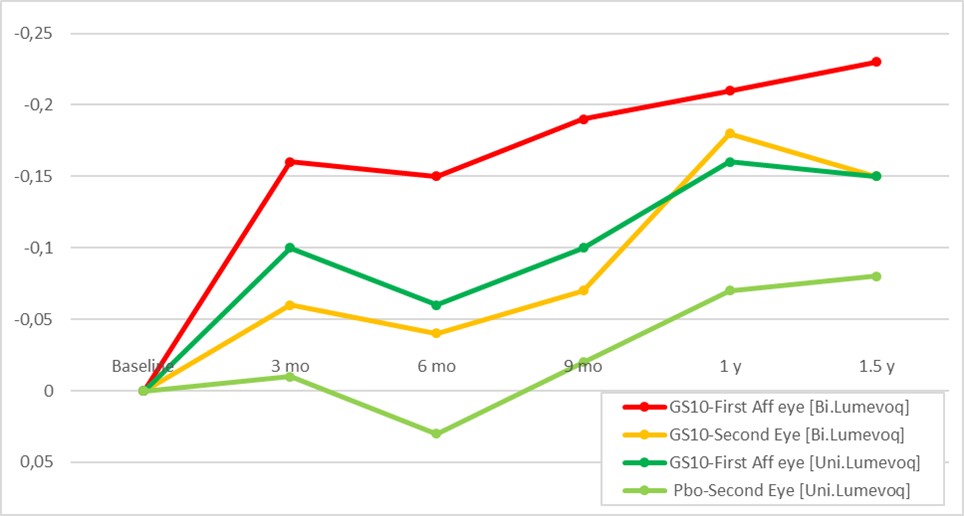
Consistent with REVERSE2 and RESCUE3, unilaterally treated subjects showed a contralateral effect in their placebo-treated eye (Figure 1). The contralateral effect reduced the difference in the outcomes among LUMEVOQ®– and placebo-treated eyes, and consequently, the trial did not meet the pre-defined primary endpoint. The difference of the change from baseline in BCVA between the second affected LUMEVOQ® and placebo-treated eyes was -0.05 LogMAR (+3 ETDRS letters equivalent; p=0.6080).
Figure 1. Best-Corrected Visual Acuity (BCVA) Change from Baseline (LogMAR) – Eye Groups
Note: Difference from baseline LogMAR. LS means are estimated by mixed models at the eye level, adjusted on baseline, with repeated values for each patient.
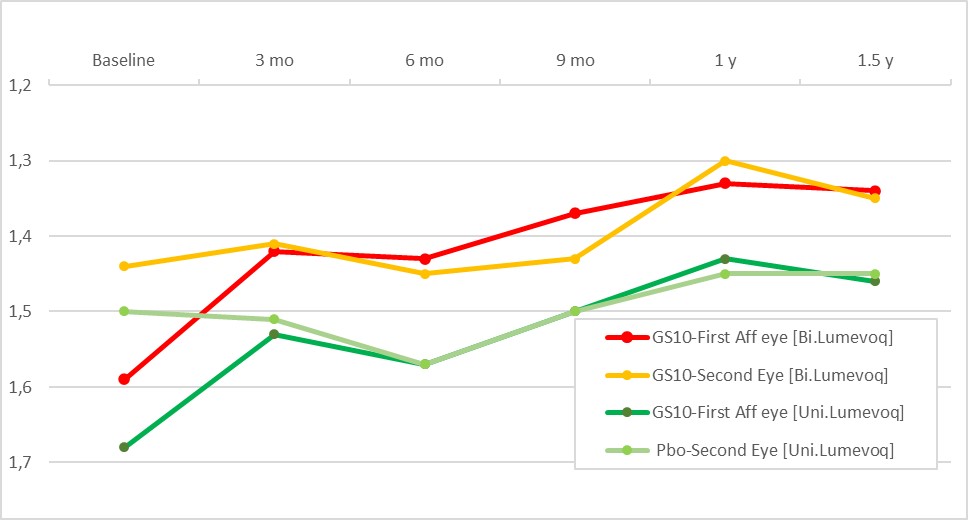
A dose effect, seen between bilaterally and unilaterally treated subjects, provides new evidence on LUMEVOQ® efficacy. In each group, the BCVAs of both eyes improved from baseline in tandem, but with a higher treatment effect for bilaterally treated subjects (Figure 2). The mean BCVA at 1.5 years for bilaterally and unilaterally treated subjects reached 1.35 and 1.45 LogMAR, respectively, with an absolute difference between arms of +5 letters in favor of bilaterally treated subjects.
Figure 2. Mean BCVA over time (LogMAR) – Eye Groups
Note: Mean LogMAR at each timepoint
Responder analyses show that most of the subjects responded to treatment and confirm that bilateral injections provide better efficacy. Most of the subjects had on-chart BCVAs at 1.5 year (able to read letters on a screen): 85% of bilaterally treated subjects and 72% of unilaterally treated subjects.
Efficacy demonstrated even more clearly in visual acuity improvement from nadir
Comparison against nadir (worst BCVA from baseline to 1.5 year) more starkly demonstrates the efficacy of LUMEVOQ®, even for the placebo eyes that showed the contralateral effect.
Table 2: Change in Best-Corrected Visual Acuity (BCVA) versus Nadir, 1.5 Years after Injection
At 1.5 years, improvement by at least 3 lines from nadir was demonstrated by 69% and 64% of bilaterally and unilaterally treated subjects, respectively.
Bilateral injections have favorable safety profile
The favorable safety profile of LUMEVOQ® was confirmed. There was no study discontinuation related to systemic or ocular adverse event. There were no serious ocular adverse events. The main ocular adverse event was intraocular inflammation, mostly mild, and responsive to conventional treatment. The good safety profile was comparable in unilaterally and bilaterally treated subjects.
LUMEVOQ® efficacy from the three Phase III trials – RESCUE, REVERSE and REFLECT – is highly consistent across the studies.
GenSight Biologics plans to add the full results of REFLECT to the EMA clinical dossier during the ongoing review of the LUMEVOQ® Marketing Authorisation Application and will present the analyses to the FDA later this year.
GenSight will host a KOL event on Friday, July 9, at 8:00 am EDT / 2:00 pm CEST, to present key results of REFLECT. Details will be announced at a later date.
References:
Newman NJ, Carelli V, Taiel M, Yu-Wai-Man P. Visual outcomes in Leber hereditary optic neuropathy subjects with the m.11778G>A (MTND4) mitochondrial dna mutation. J Neuroophthalmol. (2020) 40:547–57. doi: 10.1097/WNO.0000000000001045.
Newman NJ, Yu-Wai-Man P, Carelli V, Moster ML, Biousse V, Vignal-Clermont C, et al. Efficacy and safety of intravitreal gene therapy for leber hereditary optic neuropathy treated within 6 months of disease onset. Ophthalmology. (2021) 128:649–60. doi: 10.1016/j.ophtha.2020.12.012.
About GenSight Biologics
GenSight Biologics S.A. is a clinical-stage biopharma company focused on developing and commercializing innovative gene therapies for retinal neurodegenerative diseases and central nervous system disorders. GenSight Biologics’ pipeline leverages two core technology platforms, the Mitochondrial Targeting Sequence (MTS) and optogenetics, to help preserve or restore vision in subjects suffering from blinding retinal diseases. GenSight Biologics’ lead product candidate, LUMEVOQ® (GS010; lenadogene nolparvovec), has been submitted for marketing approval in Europe for the treatment of Leber Hereditary Optic Neuropathy (LHON), a rare mitochondrial disease affecting primarily teens and young adults that leads to irreversible blindness. Using its gene therapy-based approach, GenSight Biologics’ product candidates are designed to be administered in a single treatment to each eye by intravitreal injection to offer subjects a sustainable functional visual recovery.
About Leber Hereditary Optic Neuropathy (LHON)
Leber Hereditary Optic Neuropathy (LHON) is a rare maternally inherited mitochondrial genetic disease, characterized by the degeneration of retinal ganglion cells that results in brutal and irreversible vision loss that can lead to legal blindness, and mainly affects adolescents and young adults. LHON is associated with painless, sudden loss of central vision in the 1st eye, with the 2nd eye sequentially impaired. It is a symmetric disease with poor functional visual recovery. 97% of subjects have bilateral involvement at less than one year of onset of vision loss, and in 25% of cases, vision loss occurs in both eyes simultaneously. The estimated incidence of LHON is approximately 800-1,200 new subjects who lose their sight every year in the United States and the European Union.
About LUMEVOQ® (GS010; lenadogene nolparvovec)
LUMEVOQ® (GS010; lenadogene nolparvovec) targets Leber Hereditary Optic Neuropathy (LHON) by leveraging a mitochondrial targeting sequence (MTS) proprietary technology platform, arising from research conducted at the Institut de la Vision in Paris, which, when associated with the gene of interest, allows the platform to specifically address defects inside the mitochondria using an AAV vector (Adeno-Associated Virus). The gene of interest is transferred into the cell to be expressed and produces the functional protein, which will then be shuttled to the mitochondria through specific nucleotidic sequences in order to restore the missing or deficient mitochondrial function. “LUMEVOQ” was accepted as the invented name for GS010 (lenadogene nolparvovec) by the European Medicines Agency (EMA) in October 2018.
About REFLECT
REFLECT is a multi-center, randomized, double-masked, placebo-controlled study to evaluate the safety and efficacy of bilateral injections of GS010 in subjects with LHON due to the NADH dehydrogenase 4 (ND4) mutation. In the active arm, GS010 was administered as a single intravitreal injection in each eye of each subject. In the placebo arm, GS010 was administered as a single intravitreal injection to the first affected eye, while the fellow eye received a placebo injection.
The primary endpoint for the REFLECT trial is the BCVA reported in LogMAR at 1.5 years (78 weeks) post-treatment in the second‑affected/not‑yet‑affected eye. The change from baseline in second‑affected/not‑yet‑affected eyes receiving GS010 and placebo is the primary response of interest. The secondary efficacy endpoints include: BCVA reported in LogMAR at 2 years post-treatment in the second‑affected/not‑yet‑affected eye compared to both placebo and the first‑affected eye receiving GS010, OCT and contrast sensitivity and quality of life scales.
The trial was conducted in multiple centers across Europe (1 each in France, Spain, Italy and the UK), the US (6 centers) and Taiwan (1 center). The trial planned to enroll 90 subjects with vision loss up to 1 year in duration; 98 subjects were successfully screened and treated. The first subject was treated in March 2018 and the last one in July 2019.
ClinicalTrials.gov Identifiers:
REFLECT: NCT03293524
https://www.gensight-biologics.com/wp-content/uploads/2026/07/Graph-1.jpg516964jbenedicto/wp-content/uploads/2026/06/logo-color.svgjbenedicto2021-06-30 05:30:002026-11-04 04:08:58GenSight Biologics Reports Topline Results from REFLECT Phase III Clinical Trial, Confirming LUMEVOQ® Efficacy Including Better Efficacy with Bilateral Treatment
The Website uses cookies. Alongside the cookies that are strictly necessary for its operation, we would like to use cookies to (1) remember your video-playback preferences, (2) measure the Website's traffic and usage, and (3) support advertising measurement and conversion tracking, as described in our Cookie Policy. By clicking "Accept all," you consent to the use of all these cookies. By clicking "Reject all," you decline every cookie other than those that are strictly necessary. You can change your choices at any time by clicking "Cookies management."
Functional cookies
Always active
These cookies remember your Vimeo player preferences, such as volume, video quality, and captions.
Preferences
The technical storage or access is necessary for the legitimate purpose of storing preferences that are not requested by the subscriber or user.
Analytics cookies
These cookies distinguish between visitors and support our reporting on the Website's traffic and usage.The technical storage or access that is used exclusively for anonymous statistical purposes. Without a subpoena, voluntary compliance on the part of your Internet Service Provider, or additional records from a third party, information stored or retrieved for this purpose alone cannot usually be used to identify you.
Advertising cookies
These cookies store a unique visitor identifier that supports advertising measurement and conversion tracking.